

In South Asian culture, 'there is no shame in leaning on family'
By Anchel Krishna
The first conversation we had about our daughter Syona's independence was when she was a year old and had just been diagnosed with cerebral palsy. Syona is 15 now.
Typing that first sentence makes me realize how ridiculous it was—after all, is anyone talking about independence for a typical one-year-old?
But the conversation starts early for kids with disabilities. It is almost always the long-term goal. While I want Syona to have as much autonomy as she functionally can, I think we miss the value of interdependence.
Syona’s care will be our responsibility for our lifetime, for as long as we can manage it. And we are setting up things as we progress through these middle years—our home, finances and care supports—to enable that to happen.
My husband Dilip and I were born in Canada but have South Asian backgrounds. In much of South Asian culture family ties are central and interdependence is a value, not a vulnerability. It’s something we learn from a young age.
Extended family shows up. Caring for one another is not up for debate. Parents and grandparents are woven into daily life in ways that feel natural and expected. We live in a context where community matters and where relationships are not just about what you can do on your own but about what you do together.
Kids are your children for life. Love is often shown through food. In our family, to this day, my parents will often make extra food anytime they are cooking to help tide our families over for a few meals. It is a gesture that carries so much meaning and truly offers practical help. It is something that is a gift for us.
Even when Syona is an adult, and as Dilip and I get older, we will always have to consider her needs, care for her and plan for respite. And that can feel daunting. But this interdependence with my family has given me a softer lens on Syona’s future. It takes a little bit of the fear out of it.
In many South Asian homes, it’s common for adults to stay close to family into adulthood. Young adults living at home while they work through education or early career steps is not unusual. It has taught me that life is not meant to be lived in isolation. And this lesson feels relevant in a different way as we parent Syona. Parents and adult children support one another, financially and otherwise, not because one is less capable but because life is shared. This normalization of interconnected lives can make the idea of interdependence feel familiar rather than something to fear.
I think this has shaped how I look at Syona’s future. Whenever professionals ask what I want for her I hear that Western tagline of “independence” in my head. I know that growth, choice and participation matter. I want all of that for her. But I also find myself remembering that supporting her to have rich relationships and strong family roots matters just as much. In our cultural frame there is no shame in leaning on family. There is no failing in needing help. That belief has underpinned how I imagine Syona’s life with hope and not anxiety.
Of course there are challenges wrapped into this cultural fabric too. South Asian families often have strong expectations about milestone achievements, success, marriage and duty. Those norms can create pressure and extra layers of stress for parents of children with disabilities. Stigma around disability persists in some parts of our community and can make seeking help or talking about a child’s needs harder. Families can feel isolated or hesitant to show vulnerability when there is community pressure to appear “strong” or have everything together. These tensions are real, and they matter. At times I have felt them myself. But I have also seen the ways that community can rise to support us when we allow it in.
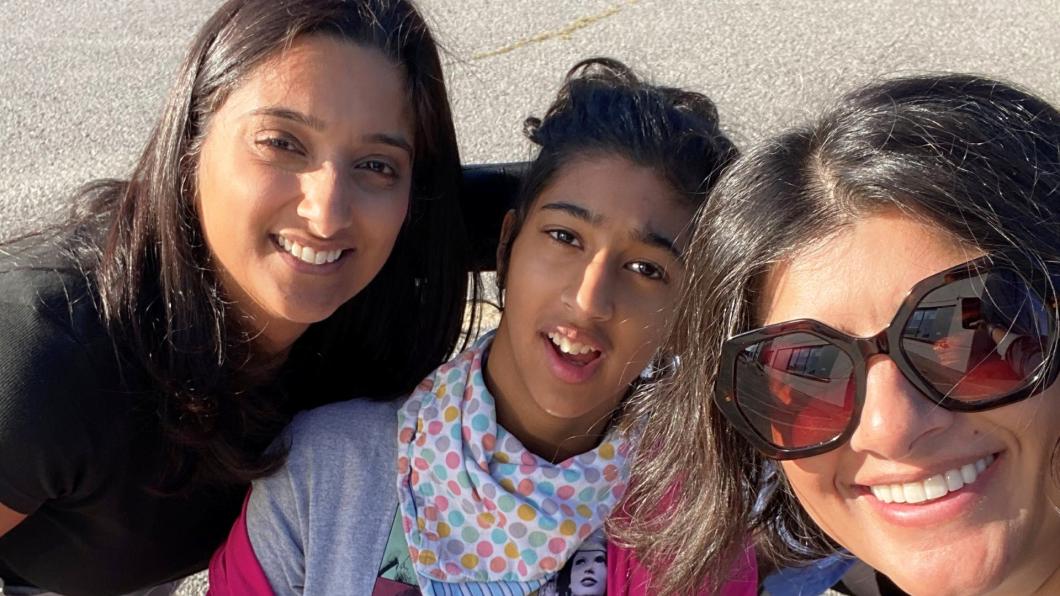
As we were trying to map out Syona’s high school courses recently, my sister sat down with her. Syona sometimes gets stuck on one thing. In this case it was getting all her required courses first, with electives after. She needed to understand that sometimes schedules don't work out the way you want them to, and you have to pick a few options to be flexible. Syona was better able to hear this from her aunt, a trusted adult who was not mom or dad. We are so very lucky to be surrounded by people who recognize that our family's experience is unique and develop their relationships with Syona so we don’t feel alone. That is a gift I never take for granted.
Yes, I want Syona to have opportunities to grow, to participate fully in her community and to make choices for herself. But I also want her to know that it is okay to lean on people who love her. In South Asian culture we don’t draw sharp lines between independence and interdependence. They live next to each other. We call that life.
The goal isn’t to fit Syona into a box labelled independent or dependent. The goal is for her to live a life where she belongs, contributes and knows love deeply. In that sense I am grateful for the values I carry from my background. They sit with me when I imagine what her first job could look like—a role that isn't necessarily traditional, but where she contributes and gets a real sense of pride. Or think about the fact that she will always live with us. What I see now is not a future she or we will face alone, but one she will face with the strength of family and our culture. And that feels like a beautiful kind of freedom to me.
Interdependence can be a bridge to a richer future. It may be not the one you imagined, but it can be beautifully and completely yours.
Like this content? Sign up for our monthly BLOOM e-letter or or take our short BLOOM survey.