

Why do we say accessibility, when we mean anti-ableism?
By Louise Kinross
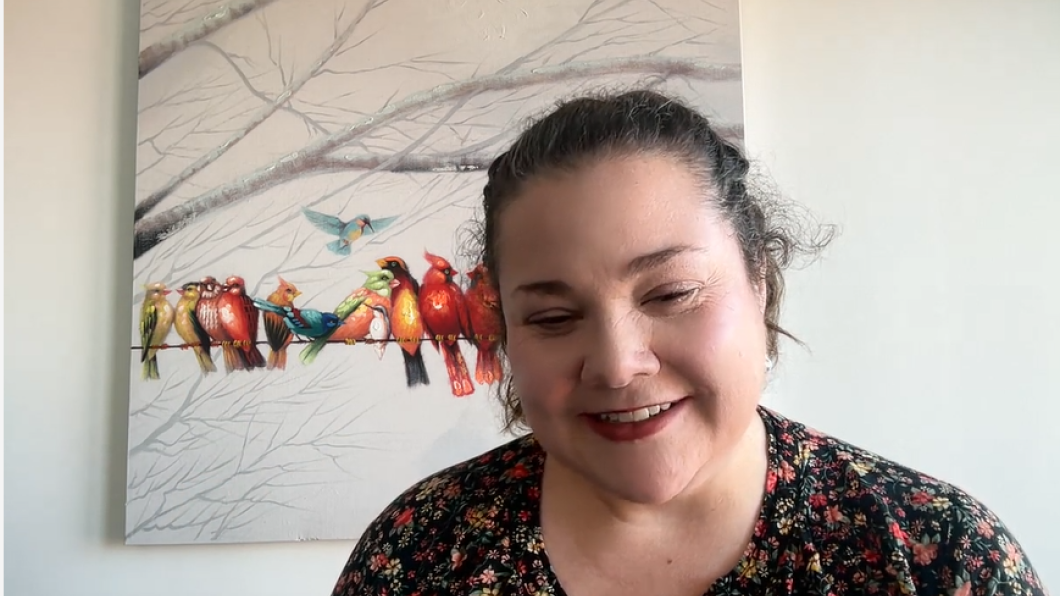
Melanie Stone is a part-time professor in disability studies at King’s University College at Western University in London, Ont. For seven years she was the accessibility advisor for the City of London. Earlier she worked as manager of client services for what was then called the Multiple Sclerosis Society of Canada. She did her PhD thesis on working disabled mothers. In May she gave a talk called The Edges of Ableism at Holland Bloorview.
BLOOM: I wanted to talk to you about words. I liked what you said about how using the word accessibility obscures what we're really talking about. Why is it that we tend to default to the word accessibility? Because we do that in our hospital as well.
Melanie Stone: This was brought to my attention a few years ago by the chair of our accessibility advisory committee. Accessibility was becoming a budget item, right? A line, if there's time, if there's room, if there's agreement. But we weren't naming or tackling the big city issues the way we were with other 'isms' like sexism or racism, right? So the chair suggested we start saying this is ableist. If you're not going to put in a sidewalk in this community, and we're preventing people from navigating our communities, this is ableism. It made so much sense to me.
As I was working through my own thesis, a lot of moms were talking about ableism, but they weren't naming it.
They would say: I can't find accessible housing. There's a 20-year waitlist. I can't find an accessible daycare. I was like 'This is ableism, this is a structural violence.' We have to start using this word. And we have to make it hard for people to turn down.
Sometimes people think of accessibility as a nice to have, right? Whereas if it's anti-ableism, it packs a little bit more punch and it speaks to the fact that a lot of this is structural violence.
There is a choice being made to not put in something that will assist people in a significant way to get where they need to go safely.
That's ableism. There's no real other way to put it. We are ignoring really critical infrastructure projects, critical decisions about people's access to life-saving things, whether it's a library, a cooling centre, a heating centre, all of those things.
It certainly feels better addressing things using that language because it feels more intentional. It's intentional to put a barrier in place. Or it may not have been intentional, right? It may have just been something that has been left there, but it is intentional if we don't remove it. Once something is pointed out to us, and then if we choose not to remove it, that is a form of ableism.
I think it's time to call some of these things out as exactly what they are, instead of dancing around a lot of issues.
Part of it is a funding issue. We don't want to upset funders, so we go along with language that makes sense to our grantees. People like being pro something, like accessibility, but not necessarily doing anti-ableism, even though they're the same thing.
We talk in softer language, so we don't have to confront that a lot of this exists because of ableism. In a hospital, you're not supposed to admit there was some ableism. I'm part of disability organizations, and they're wonderful, but we still had ableism. It's around us. We're marinating in it, right?
BLOOM: It's the culture, it's everywhere and it's within us. You gave some great definitions of ableism in your presentation. Is there one particularly helpful for parents of children with disabilities?
Melanie Stone: Talila Lewis's is the most comprehensive:
BLOOM: Here's part of it: 'A system of assigning value to people's bodies and minds based on societally constructed ideas of normalcy, productivity, desirability, intelligence, excellence, and fitness. These constructed ideas are deeply rooted in eugenics, anti-Blackness, misogyny, colonialism, imperialism, and capitalism.'
Melanie Stone: I like it because there's a line at the bottom that says: 'You do not have to be disabled to experience ableism.' If you are a parent of a child with a disability, you're going to experience ableism. A lot. And this definition gives a robust understanding of ableism that includes behaviour, right?
Think about if your child has some challenges on an airplane. Someone may post it online and scream at the parents, as opposed to as a community, asking what is our responsibility in making sure children can travel safely, and with an understanding that for certain children some behaviours may happen?
This definition allows parents to go 'Oh my gosh, I understand it.' I see what ableism can be by experiencing it through my child. Or even the expectations that a lot of people put on children to be sort of extensions of their parents, right?
BLOOM: I think that word expectations is important. You did your PhD on moms with disabilities. Did you want to tell us a bit about what you learned?
Melanie Stone: Yes, and four out of six of them had children with disabilities as well. They were given cameras and told to go and take pictures of their life. Some shared creative adaptations they made to wheelchairs or other things to help them with early years parenting, which is a lot more physical.
But a lot talked about how lonely it was when you weren't able to get into the door to the parenting groups. They were always in someone's house or at a private venue with a couple of steps. So you weren't invited to those.
The ones that were sort of at a more neutral place, like a library, would still have expectations of physicality with the children, that parents could get out of their wheelchair and get on the ground and participate with their children in these activities. There wasn't ever thought given to parents and children who may need that extra help.
When a child had trouble, because of the parent's disability, because mom couldn't hold them in a particular way, staff tended to be like 'Oh, that's too bad.' As opposed to 'I hadn't thought about how this activity was exclusive. Let's work together to see if I can help or you can show me how you react to your baby in this way.'
These are publicly funded spaces, often drop-in centres. And no one has thought of disability. A lot of times there are soft mats all over the floor, so you can't get your wheelchair in the door.
I think of all the ways in which the women and their own bodies felt like they didn't belong.
A lot of people with disabilities have children. It's not new. But if you go into BabiesRUs to buy [an adapted] crib, they don't exist. You have to have them made specially for you. Why don't we have these things? After knowing so many parents need them? This is a form of ableism, right?
BLOOM: In your presentation you spoke of medical ableism. What is that?
Melanie Stone: One of the ways I think about medical ableism is when the medical professional dominates the discourse entirely about what a child's future may be like.
I've heard so many stories of people being told, when their baby is a month old, 'Your son will never drive.' I don't know that that's a conversation we need to have at one month. Nobody came up to my baby and started naming all the things that she would never do. That is a very strange thing to do. It's also lumping so much onto parents in those very early days, when we're still getting to know our baby.
I think medical ableism is the dominant understanding that the medical professional is the most important person, instead of it being a two-way street with parents: 'Okay, so maybe my son won't drive, but what adaptations will he need to get to preschool?'
BLOOM: What is most challenging about teaching disability studies?
Melanie Stone: It's shifting that mindset of first-year students from the medical model of disability, and they're there to help and fix, to, and by the end of the semester, understanding that helping is one part, but so is listening and engaging, and that ableism is the problem, not necessarily disability.
BLOOM: Everyone loves the narrative of 'overcoming' disability.
Melanie Stone: 100 per cent. We talk about how we have an inherently ableist 'overcoming' narrative. It's usually around week three when I introduce this story about how 'then they climbed a mountain' or whatever else. But what if I'm never going to climb a mountain? Or run a marathon?
We talk about interdependence, and how we need each other and need to live in a society where we see the inherent value of everyone. So someone doesn't bring in an income. Who cares? That's a capitalist understanding. How did we get to a point where we only value people if they matter to a market? Or they can put on their own socks? A lot of disability studies is about rethinking why we think certain things matter.
I would love for disability studies to be a part of medical spaces, in hospitals and medical schools. Because there are things that we can't fix and probably don't need to be fixed.
BLOOM: When is it best to teach young children about disability and ableism?
Melanie Stone: Really young. I mean from day one our books should be inclusive and have people with disabilities in them. I used to tutor a friend's daughter, and she used to take my baby on her wheelchair out into the community and zoom around.
One day she came home and she had leaves in her hair and she said: 'Sorry, but she figured out where the power thing was and took me for a ride right into a bush.' My daughter was so comfortable growing up around people with disabilities I had to teach her 'We can't climb on everyone's wheelchair.'
Like this content? Sign up for our monthly BLOOM e-letter.