


Parents benefit from free legal advice at Holland Bloorview
By Louise Kinross
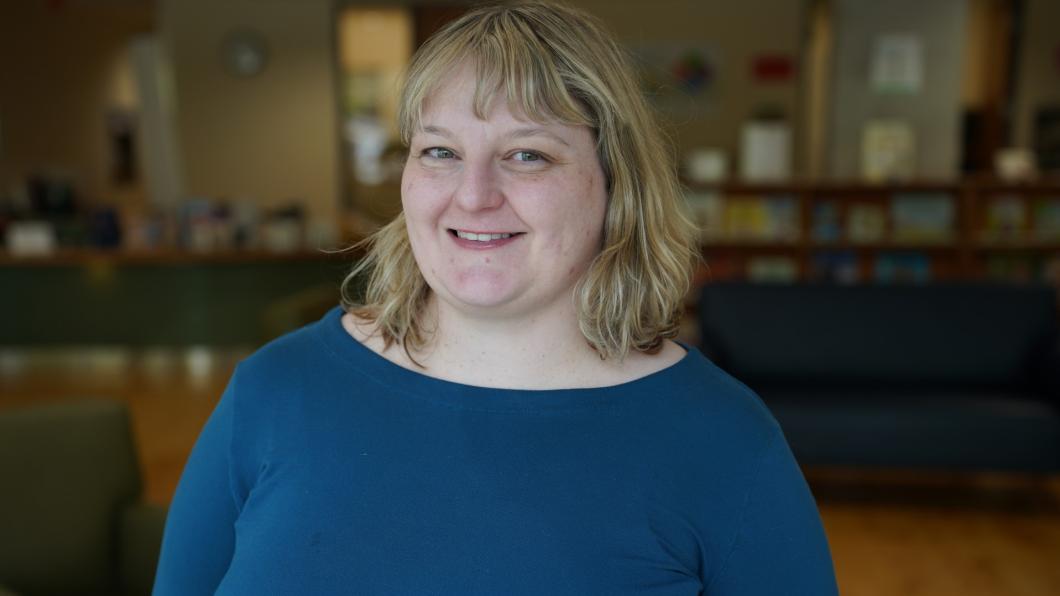
Every year about 250 Holland Bloorview parents turn to Rosemary Masemann (photo above), a lawyer with Pro Bono Ontario, for advice. We spoke about the concerns they bring and how Rosemary assists them. She is part of the Client and Family Integrated Team in the family resource centre and her work is made possible by donations to our foundation.
BLOOM: What is your role here?
Rosemary Masemann: I’m triage lawyer in the medical-legal partnership between Holland Bloorview and Pro Bono Ontario. That means I give advice, brief services and referrals to families and patients about legal issues that are affecting them. I attempt to talk to everybody who asks me for help.
BLOOM: So the service isn’t limited to people with a low income?
Rosemary Masemann: No, we don’t have an income cut-off. It’s for past and current patients and families of Holland Bloorview. The reason we don’t have an income cut-off is because of the extraordinary medical expenses families are dealing with. Sometimes their income on paper doesn’t reflect their ability to access paid legal services.
I work at Bloorview two days a week. If the patient is at SickKids, I work there three days a week. I also have counterparts at CHEO and London Children’s Hospital.
BLOOM: What are the most common issues parents bring you?
Rosemary Masemann: At Bloorview one of the major ones is capacity issues for youth who are moving from the pediatric to adult system. And that isn’t just about adult health care services, but also adult government benefits.
I talk to parents about decision-making and what they may or may not need to do to enable their child to make decisions themselves or in a supported way with family members.
BLOOM: And if your young adult child isn't able to make health decisions on their own, you don’t have to become a guardian do you?
Rosemary Masemann: No, you don’t. In Ontario, we have the Health Care Consent Act, which basically empowers family members to make health-care decisions on behalf of their family member when a clinician has determined that they don’t have the ability to make a particular decision. You don’t need an extra piece of paper to do that in Ontario.
BLOOM: That’s good to know, because many parents are concerned about the legal costs to become a guardian.
Rosemary Masemann: I would recommend all those parents watch our Bridging to Adulthood Pop-Up webinars. I present them quarterly and we go into how to make decisions, which paper you may or may not need, and the pros and cons of each path. Or they can reach out to me directly, and I’m happy to talk to them.
BLOOM: What are other parent concerns?
Rosemary Masemann: Another common one is questions about special education supports. So legal entitlement to extra supports for special education in the school system.
BLOOM: I understand that you hear from families about housing issues, for example evictions.
Rosemary Masemann: Yes, evictions or problems with landlords, sometimes directly as a result of the child’s disability. For example, kids with special needs may be loud. Sometimes that disturbs neighbours or landlords. I advise on human rights and housing law.
BLOOM: Can you give one example of a problem you were able to help a family with?
Rosemary Masemann: Recently I was able to write a letter to a school board that had pulled some support for a student at the beginning of the year. In this case the child had a one-on-one educational assistant and they were changing that to shared support. With some advocacy we were able to get them to dial back that decision and put back the one-to-one support.
BLOOM: So they responded to your letter in a way that they hadn’t been responding to the parent?
Rosemary Masemann: Exactly. Sometimes it helps to have a letter from a lawyer because it can put the issue in front of a different set of eyes at the institution, maybe their own lawyer or a supervisor. My privilege as a lawyer can escalate things to a different level.
BLOOM: Have we seen any trends in the last year in the kind of problems families are grappling with?
Rosemary Masemann: Anecdotally, in the past year or so there have been a lot of immigration questions. Canada’s immigration system has gotten more restrictive and parents are finding it challenging in some cases to find ways to stay in the country legally so they can access the health care they’re getting for their kids.
BLOOM: Are those challenging cases?
Rosemary Masemann: Yes. First, the immigration system is very complicated. I’m limited in what advice I can give. We often need a lawyer with more expertise than I have to look at the whole history of the file.
The other issue is the really long processing times which cause a lot of uncertainty and stress for families who are waiting on an answer. Being in that limbo is really hard on people. But the wait times are not a legal issue and I don’t have control over them.
BLOOM: You mentioned writing letters. What are other ways you support parents?
Rosemary Masemann: I often give basic advice about their situation and the state of the law, and you’d be surprised how often that is really effective in giving people a path forward to take the next step.
The other thing I give is referrals when my advice isn’t in-depth enough to solve the problem. I refer people to other organizations or services like Legal Aid Ontario or a community legal clinic.
In very rare cases I can match a parent with a pro bono volunteer lawyer. For example, we have a program with Gowling, which is a law firm on Bay Street. They will help Holland Bloorview families with appeals if they've been denied Assistance for Children with Severe Disabilities funding.
I advise on issues affecting the social determinants of health. That includes problems accessing government services or benefits, social assistance and estates issues. I also give information and referrals on family law issues and notarize or commission documents for families.
BLOOM: What are the greatest challenges of your role?
Rosemary Masemann: Some of these systems are so overburdened and lacking resources that it can be very frustrating not to be able to provide the answers that people are looking for.
A good example is when people ask me for help with subsidized housing. I can’t do anything about how long the subsidized housing wait lists are. There are very few options for people and no legal solution to that at present. Sometimes that can be depressing.
BLOOM: How do you manage stress?
Rosemary Masemann: I spend time with my family and friends. I exercise. I go to therapy. I vent to colleagues, and that’s really helpful.
BLOOM: What are the greatest joys of the job?
Rosemary Masemann: I enjoy working with people and my job is very tangible. I can see when I’m able to make an impact and that’s really rewarding. Plus I get to see the school kids driving around their bikes in the Holland Bloorview foyer.
Rosemary can be reached at rmasemann@hollandbloorview.ca or by calling 416-425-6220 ext. 6557. Like this content? Sign up for our monthly BLOOM e-letter.