



Occupational therapists and therapeutic recreation specialists require evidence to support their use of technology in clinical practice. Brain computer interface (BCI) technology can provide incredible play opportunities for children and youth with disabilities. However, this technology remains relatively untested in pediatric populations.
The Clinical BCI Program partners with the Bloorview Research Institute (BRI)’s PRISM (Paediatric Rehabilitation Intelligent Systems Multidisciplinary) Lab to answer important questions about the value of BCI technology in pediatrics and to develop best practices in its clinical use. By conducting and publishing research, we are establishing the validity of BCI programming as part of our evidence-based practice.
Our clinical program also provides support to BRI graduate students interested in expanding their understanding of pediatric disability and clinical practice. We encourage researchers to include clinicians and families in the development of their research questions and protocols whenever possible.

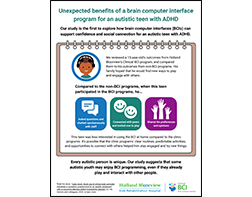
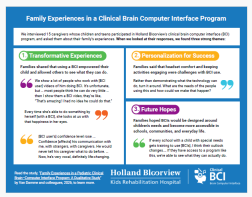
- Van Damme, S., Mumford, L., Thompson, A., Murphy, C., Ali, T., Hegazi, A., ... & Kingsnorth, S. (2026). Family Experiences in a Pediatric Clinical Brain–Computer Interface Program: A Qualitative Study.American Journal of Occupational Therapy, 80(3), 531-541.
- Van Damme, S., Mumford, L., Johnson, A., & Chau, T. (2024). Case report: Novel use of clinical brain-computer interfaces in recreation programming for an autistic adolescent with co-occurring attention deficit hyperactivity disorder.Frontiers in Human Neuroscience, 18.
Participate in Research!
Interested in participating in research? Visit Holland Bloorview's Participate in Research Page to learn more about current research opportunities.