

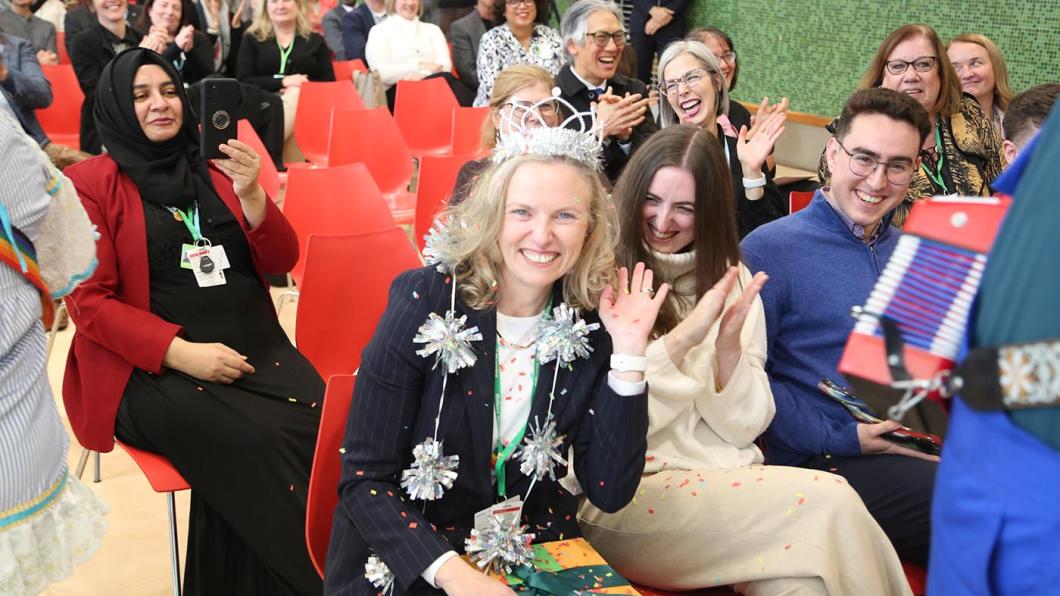
Holland Bloorview’s outgoing CEO reflects on a decade of progress with, and for, children and youth with disabilities
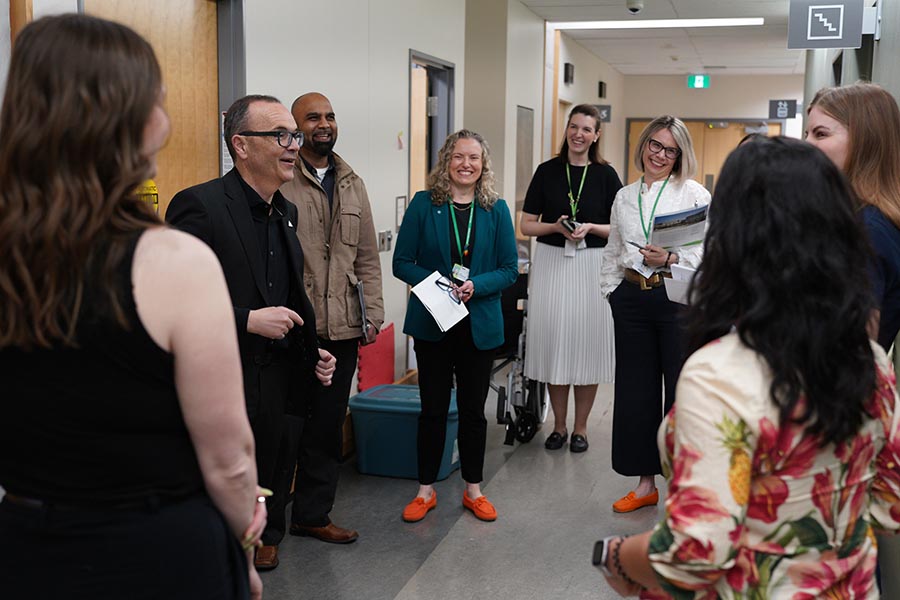
On December 2, 2025, more than 300 members of the Holland Bloorview community—including staff, clients, families, board members, volunteers, system partners and government officials—came together to celebrate outgoing president and CEO Julia Hanigsberg’s remarkable legacy and decade-long tenure at the helm of Canada’s largest pediatric rehabilitation hospital. The event included heartfelt messages from clients and families, messages of thanks from government officials and health system partners, among others.
Hanigsberg, who is retiring on December 31, 2025, sat down to reflect on some of the major accomplishments, and challenges, during her tenure, what’s next for childhood disability health care and a hint at how she’ll be spending her time in retirement.
Why is now the right time to move onto the next chapter?
I’ve had the eye-opening privilege to lead Holland Bloorview for more than a decade. I’m filled with pride for what our clinicians, researchers, innovators and educators have accomplished. Children’s rehabilitation is a wonderfully-special field that extends far beyond clinical care, into services that support a young person’s definition of a meaningful life. It's gone by in the blink of an eye. I truly and honestly believe that for organizations, it makes sense to renew leadership at the top, to bring in new vision, new energy, new ideas. It's not because I'm out of excitement for Holland Bloorview, but I think this place deserves that new leadership. So, I'm really excited for what's to come and that we’ve chosen the best CEO to lead Holland Bloorview into the future.
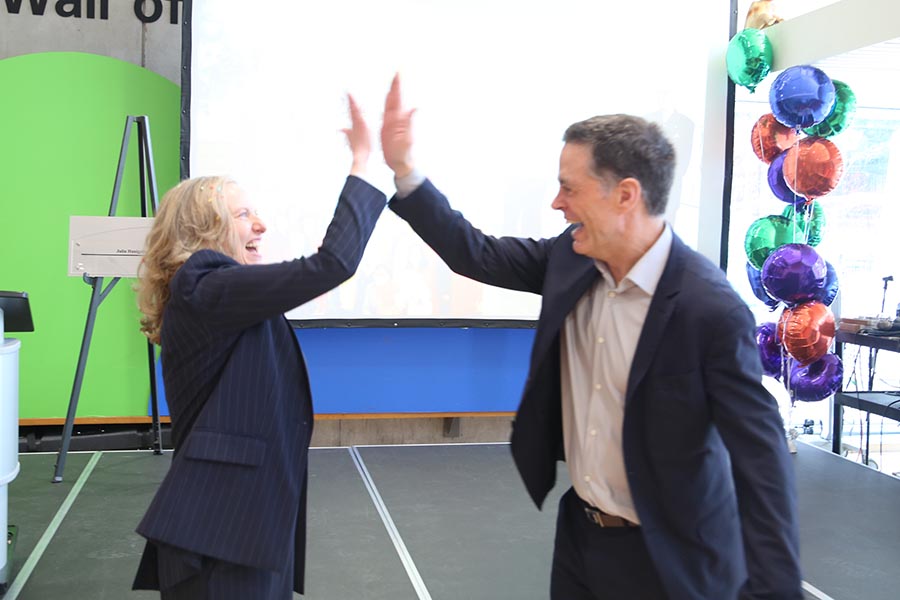
Ten-plus years is a long time. Can you pick a few accomplishments are you most proud of during your time at Holland Bloorview?
Over the past decade, Holland Bloorview has become a catalyst for system-level solutions, and we’ve seen the tangible impact of authentic collaboration:
- We were a founding member of the Ontario’s Children’s Health Coalition, which successfully advocated for a historic $330 million government investment in pediatric care.
- With CHEO and McMaster Children’s Hospital, we co-developed Canada’s first neuro-behavioural health ambulatory program. With provincial funding, dozens of hospital-, home- and community-based partners now deliver the Extensive Needs Service program, which we aim to expand further.
- We developed a transitional bed service with community partner Safehaven to offer medically-fragile children a bridge between hospital and home.
- With support from The Slaight Family Foundation, and in partnership with community-based children’s rehabilitation providers, we are bringing the Bloorview Research Institute brain computer interface technology to children in their local communities.
- With the support of donors we led the largest expansion of the Bloorview Research Institute in our history including the building of the Jason Smith Research Tower
- We expanded opportunities for employment for young people with disabilities including through our leading partnership with Project SEARCH.
- We grew the number, breadth and scope of clinical experts at the hospital from expanded mental health to respirology, behavioural analysts and beyond.
- Through Caring Safely we made tangible improvements to quality and safety for children, families and our team.
- We doubled down on our commitment to psychological safety and the well-being of our team by making this a priority in our strategic plan.
- With real resilience, courage and compassion from all levels of the organization and in partnership with families, Holland Bloorview is making authentic progress in
Inclusion, Diversity, Equity, Accessibility and Anti-Racism (IDEAA) and Truth and Reconciliation. - Our anti-stigma campaigns starting with Dear Everybody have had a real impact.
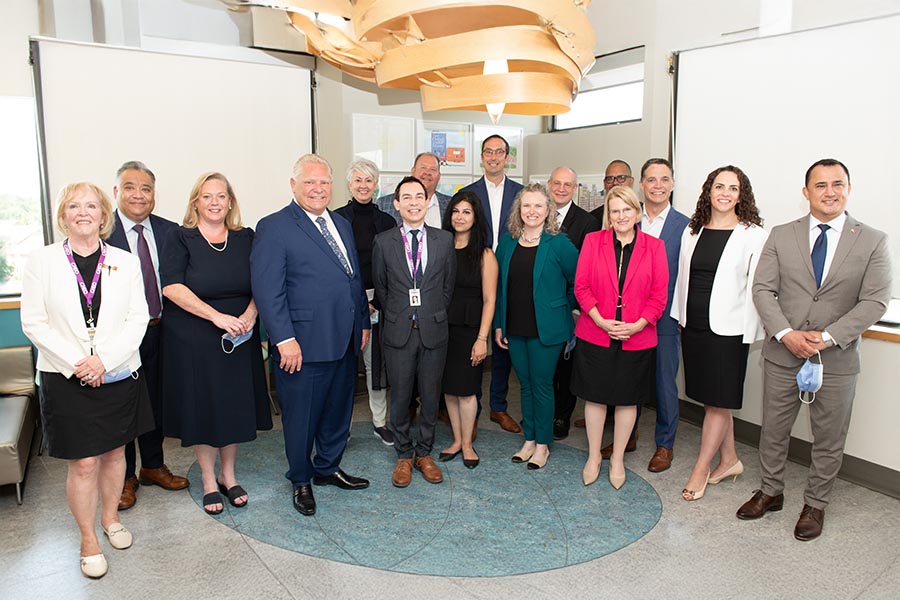
What was one of the things that challenged you the most during your time as CEO?
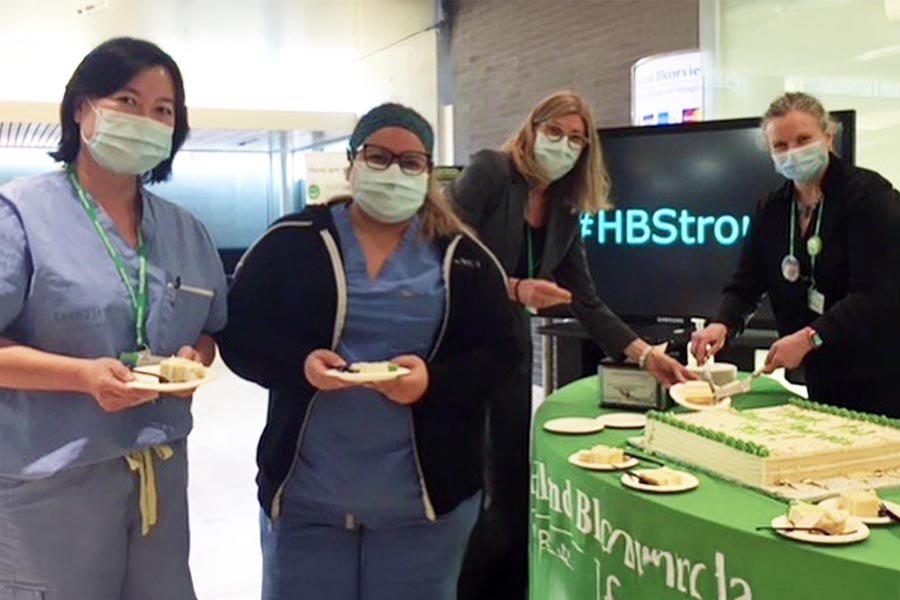
The COVID-19 pandemic – particularly in the beginning when we had to make so many decisions so quickly with incomplete information. In retrospect there are things we could have done differently but there was no way to know. I appreciate how hard some of the decisions were on members of our team or clients and families. Asking team members to come to the hospital when they didn’t feel safe getting on transit. Requiring that staff work in different places, or with different childhood conditions, that were new to them (i.e. redeploying ambulatory staff to the inpatient unit and asking dental hygienists to screen visitors at the door). Having to reduce the number of family that inpatient clients could have with them meaning less support and more emotional challenges. Ultimately, I’m tremendously proud of how we kept our staff and children and families safe, how we developed specialized services such as our vaccine clinics for children with disabilities, the adults we cared for when the hospital system was under tremendous strain and called on us to do more and the way we rapidly innovated virtual care solutions where none had existed before.
Can you share one, or two, “big ideas” for tackling some of the challenges facing the childhood disability health care sector?
Health care for kids with disabilities and developmental differences faces enormous inequities and as a society we must start by shoring up our health-care system to close these gaps. Our health-care system is beyond capacity (especially outside urban centres), causing children to miss crucial development milestones and putting them at a further disadvantage as they enter adulthood. We know the answer can’t merely be to call for more funding – we need smarter funding, high ROI investments and an approach that embraces collaboration, not fuels competition. My “big ideas” for the pediatric space? A wraparound approach to care where a consistent team is available to support a child wherever they are – be it a clinical setting or community - or home-based program. A system that sheds silos between physical, mental and developmental health. A system where every child’s needs are routinely met, relieving families of the onus to search for the right doors to knock on before joining a series of waitlists. A funding formula that truly reflects the differential costs of delivering care to children. A collaboration-first environment where innovations spread seamlessly throughout institutions so all kids with developmental needs can access them.
Is there a client or family story that has stayed with you all these years?
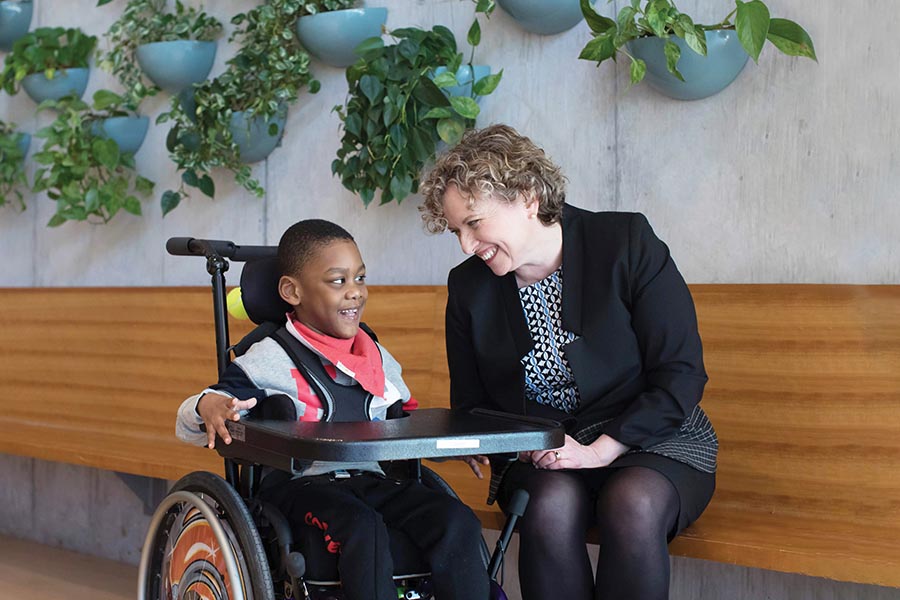
The most tangible impacts, of course, are felt at the individual level. I fondly remember a parent at our Holland Bloorview robotics program (developed in partnership with FIRST Robotics Canada), telling me she hadn’t envisioned her son ever holding down a job. But once she saw his passion for robotics, she saw his potential in an entirely new light. I witness so many examples of young people who’ve accessed great treatments, services and opportunities that set them up for healthy futures. Still, the unfortunate reality is that need greatly outstrips access to services, wait times are too long and we have urgent gaps to fill.
Do you have a parting message to Holland Bloorview clients and families?
You are so much more than your diagnosis. Our job as a health care system is to meet your most pressing needs, not to put you into a box labeled according to what is convenient for us. I think we are getting better at this at Holland Bloorview as we start to challenge some of the ways we structure the delivery of care and services to be more agile and aligned to the multiple needs of the children we see. Very few of our clients have only one diagnosis and we are trying to figure out how to take the human complexity and mold the model of services to truly meet it using rich data, the incredible creativity of our teams of clinicians and scientists and the generosity of the community to help fund innovative approaches. At Holland Bloorview, continue to demand that we see you as a whole person and invest as much in music and arts, pathways to employment, camps, nursery schools, and robotics as in the most highly-specialized therapy or medical care. Continue to be bold and courageous and to demand more of the health care system and ask for everything you need.
What’s next after Holland Bloorview?
This has been the job of a lifetime, and a bunch of people are asking me ‘What's the next job?’ The answer is, ‘I've had the best job. I've worked with the best people. There's no other next job.’ We’ll see what the next chapter holds. I'm really excited to keep an eye on Holland Bloorview because I know amazing things are going to keep happening here!
Bruce Squires will begin his term as Holland Bloorview’s incoming president and CEO on Feb. 2, 2026. Golda Milo-Manson, vice president of medicine and academic affairs, will act as interim CEO from January 1 – February 1, 2026.
By Erin Pooley